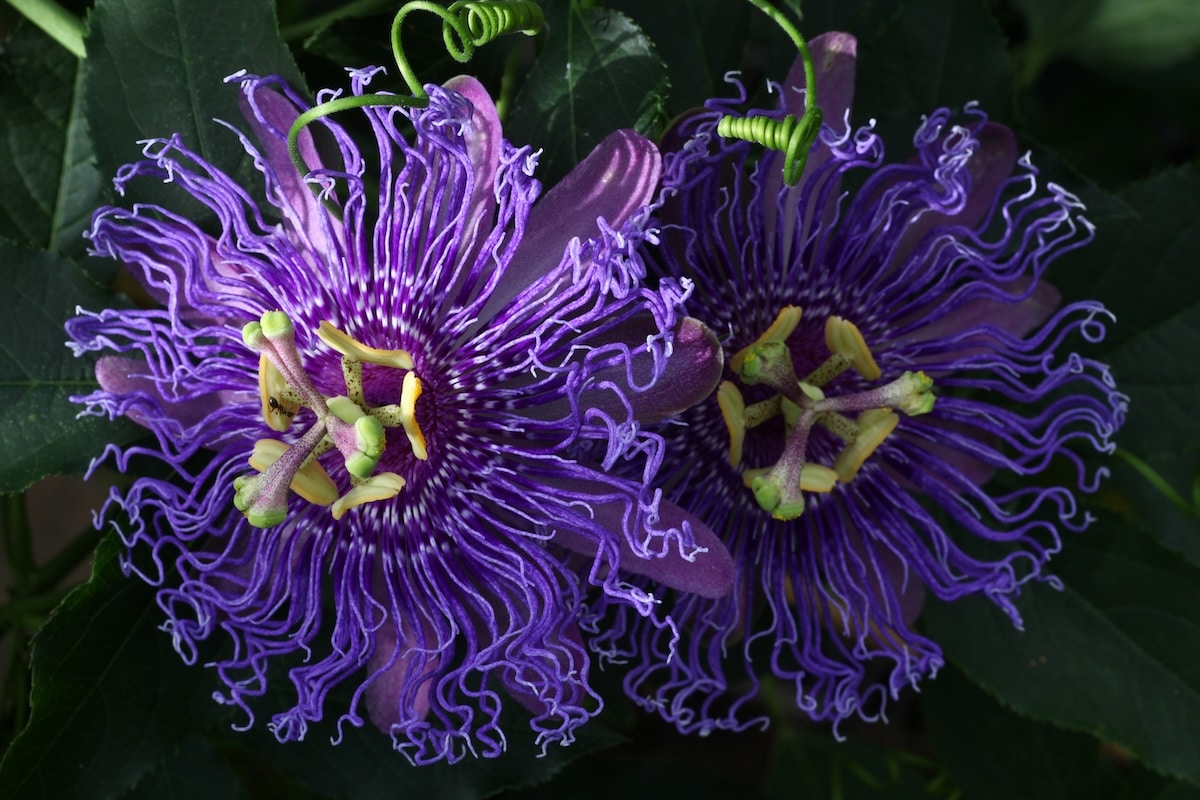
The Passionflower is absolutely my favorite flower.
At first glance it’s easy to think these incredible flowers only live in tropical rainforests on some exotic island far away, but that’s not true.
The entire east side of my neighbor’s house in Colorado was covered in passionflower vines that bloomed every summer in a deep-purple display of cosmic magic.
They look like they floated down from outer space, or like props from a sci-fi movie. My first impression when I was little was that they were tiny dancers spinning around in fancy dresses. I was really into fairies at the time.
The Passionflower is a tough, fast-growing vine that thrives across a surprisingly wide range of the United States and comes in a wide variety of colors like purple, blue, pink, and white.
Interestingly, the blooms only appear for one day. They open in the morning, are spectacular all day long, and then close in the evening for good. However, many more blossoms will follow those every day. It’s a very dramatic flower.
The native Passionflower (Passiflora incarnata) is also called a “maypop”. One theory says it’s because it pops out of the ground in May – makes sense to me.
And yes, it will absolutely eat your fence so it’s best to grow it on a trellis.
But there’s more to this plant than just its exotic blooms things like: the passion fruit, soothing herbal tea, how it attracts butterflies and bees, and as always – the myths and legends that surround it.
Fragrance
Regarding it’s fragrance, passionflowers have a light, sweet scent that’s subtle but genuinely lovely. You won’t smell it from across the yard, but if you lean in close to an open bloom and sniff gently, there’s a delicate, faintly tropical sweetness that’s really pleasant. It’s not a fragrance powerhouse but it adds a nice sensory layer to an already interesting flower.
If you’re growing it primarily for the pollinators and butterflies, fragrance is just a sweet bonus on top of everything else this plant brings to the garden.
Passion Fruit
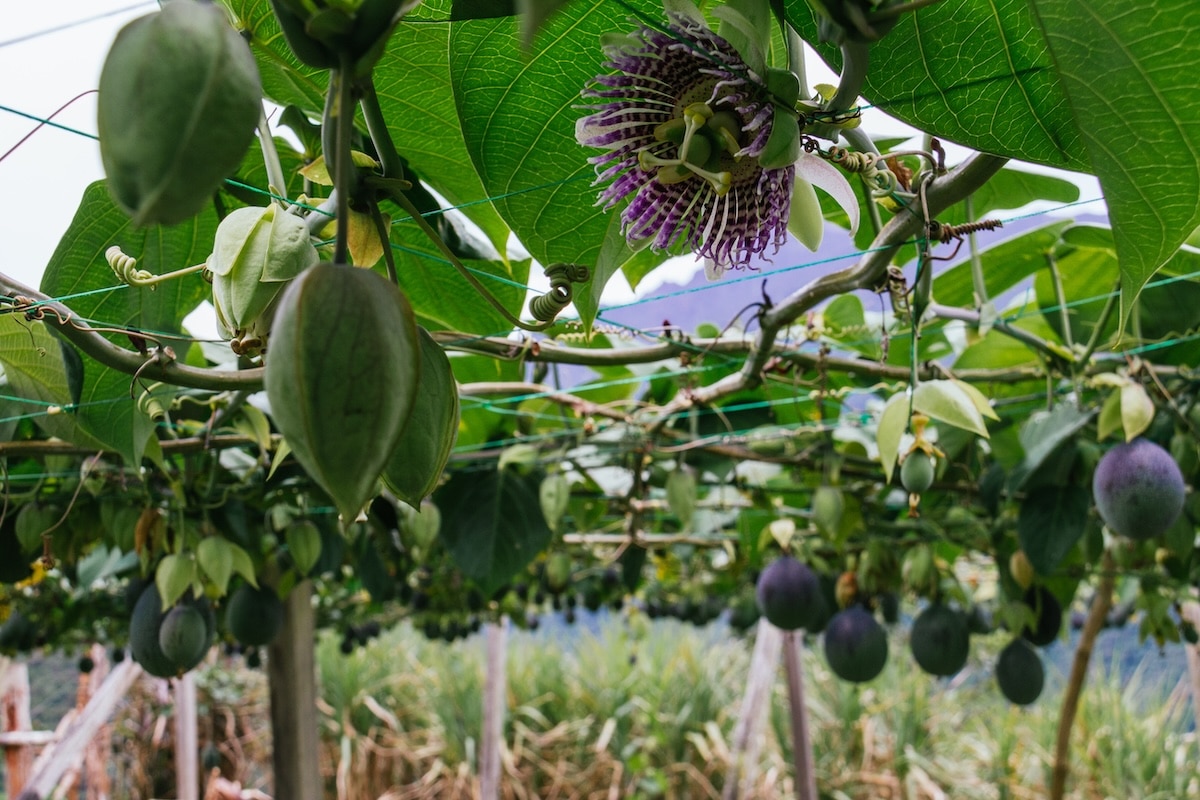
The edible passion fruit is very popular and can be found in many grocery stores. It tastes like a mild tropical fruit and makes wonderful jelly.
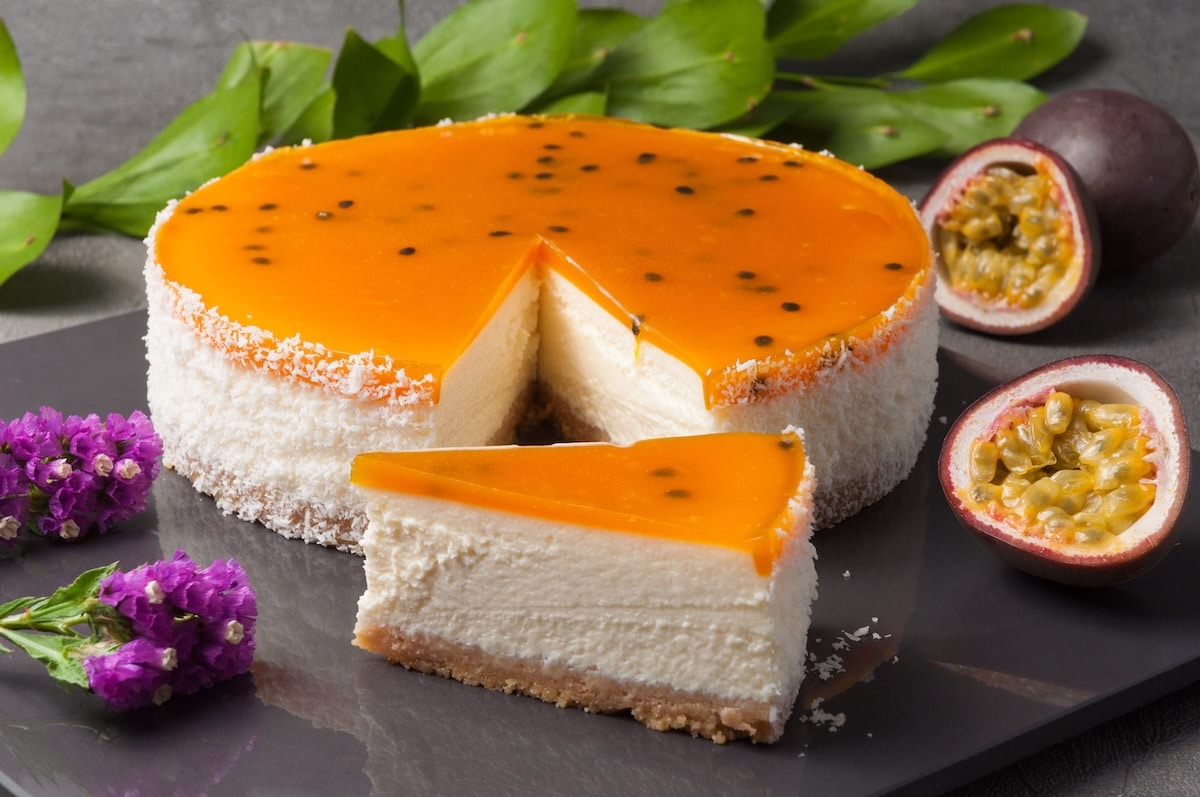
Bakeries often make a compote with it and use it as toppings for custards, tarts, and as a filling in some fancier pastries.
Passionflower Tea
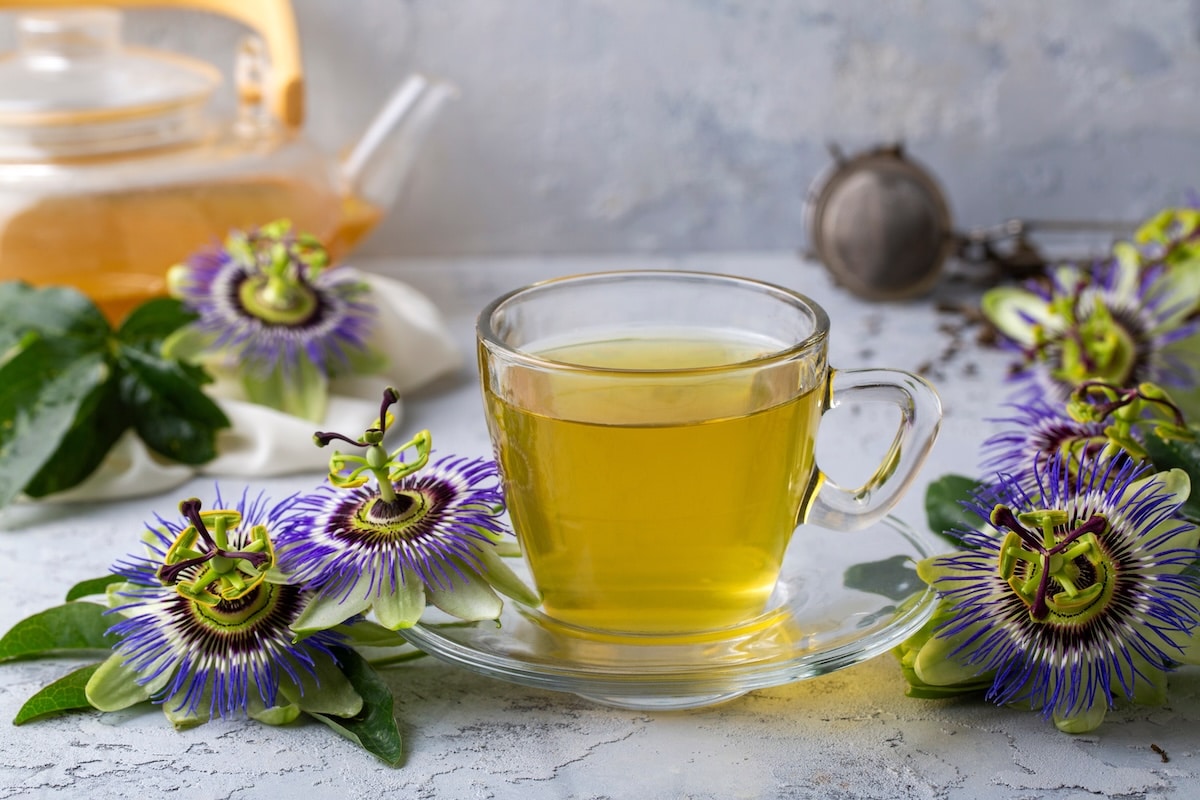
Tea made from passionflower has been used for centuries as a natural remedy for stress and anxiety.
It’s also a gentle herb that can be used to help induce a good night’s sleep. Passion Flower is known to be a muscle relaxant, and also contains antioxidant and anti-inflammatory properties.
NOTE: Pregnant women or nursing mothers should not consume anything with passionflower in it. Neither should people on blood pressure medication as it can lower blood pressure to dangerous levels.
Do not take if using other sedatives.
Myths and Legends of the Passionflower
There are several myths and legends from around the world where Passionflowers have been found.
A Spanish monk in the 1600s is said to have given the flower the name “Passion Flower after a vision he had. When this Spanish monk first encountered the flowers in the Americas, he reportedly had a vision that night in which the flower’s parts were revealed to him as symbols of the suffering of Jesus Christ — what Christians call the “Passion of Christ.”
In his vision, the spear-shaped leaves represented the centurion’s spear, the spiraling tendrils represented the whips used against Jesus, and the central column was the pillar. This vision — whether real or invented — gave the entire flower family its name: passionflower.
Native Americans also used the passionflower for centuries as a medicinal plant, and it’s still used today in herbal teas for relaxation and sleep. So this flower doesn’t just look extraordinary — it’s been part of human healing traditions for a very long time.
Indigenous and South American Myths. Before European contact, the flower played a role in the cosmology of ancient civilizations like the Aztecs, Mayans, and Incas.
- Vine of Souls: In Incan mythology, the plant is linked to the “Vine of Souls,” wherein the fruit was believed to house the spirits of their ancestors.
- Sun Worship: The large, flat, radiating shape of the corona’s filaments was seen by many Mesoamerican cultures as a symbol of the sun and was tied to sun worship
Hindu Lore: The Story of Krishna Kamal. In India, where some passion flower varieties were introduced, the flower is widely known as Krishna Kamal (the Lotus of Lord Krishna).
- According to Hindu mythology and the epic Mahabharata, the 100 radiating filaments of the flower represent the 100 Kaurava brothers from the great war.
- The central part of the flower is said to represent Lord Krishna, guarded by five anthers (representing the Pandava brothers) and topped with three stigmas (representing the holy trinity of Brahma, Vishnu, and Shiva).
Language of Flowers
In Victorian floriography (the language of flowers), giving someone a passion flower carries different meanings depending on the sentiment. While it primarily symbolizes religious fervor, faith, and piety, it was also widely used to convey a deep sense of “mourning over the death of a loved one”.
Growing Your Own Passionflowers
Which Zones are Best for Growing?
The native America species (Passiflora incarnata) is cold-hardy north up into to Zone 5. This means that gardeners up into parts of Iowa, Illinois, and New England can grow this lovely vine. The plant will die back in the winter, but the roots survive underground and will regrow in spring. It’s a tough vine.
Zone 5-6: It will die back in winter but will re grow in spring.
Zone 7-8: This zone is ideal for Passionflower Incarnata.
Zone 9: Great for Passionflower Incarnata and also some exotics species
Zone 10-11: This is a tropical species paradise.

Sun, Soil & Support
Sun: It likes full sun to partial shade. It blooms best in full sun but handles partial shade better than most.
Soil: The soil should be well-draining – not too wet all the time or its roots will get root rot and turn the leaves yellow.
Support: It needs something to climb – a trellis, fence, or arbor. It uses tendrils to attach itself so any structure with something to wrap around works great. It grows really quickly, so make sure your structure is solid.
Watering
Water regularly for the first season while your passionflower gets established. After that, it’s fairly drought-tolerant. It’s one of the more forgiving vines you can grow.
In hot, dry summers, a deep watering once a week is plenty for established plants. Avoid overwatering; consistently soggy soil can cause root rot and yellowing leaves.
Fertilizing
Don’t overdo the nitrogen otherwise it will favor leaves over flowers. Light fertilizing in spring with a balanced, slow-release fertilizer is all you need. One application in early spring and you’re done. If you have decent soil, you may not need to fertilize at all after the first year.
Pruning
Passionflower is very vigorous (vines generally are) and will happily grow well beyond its designated space if you let it. During the growing season, trim back any shoots that are heading somewhere inconvenient like under siding, shingles, or eaves on your house where it can actually creep into your attic. I’ve had it happen!
In late winter or early spring, cut back any dead or frost-damaged growth. In colder zones where the vine dies back completely, you can cut it all the way to the ground – it will come back.
Wildlife Benefits
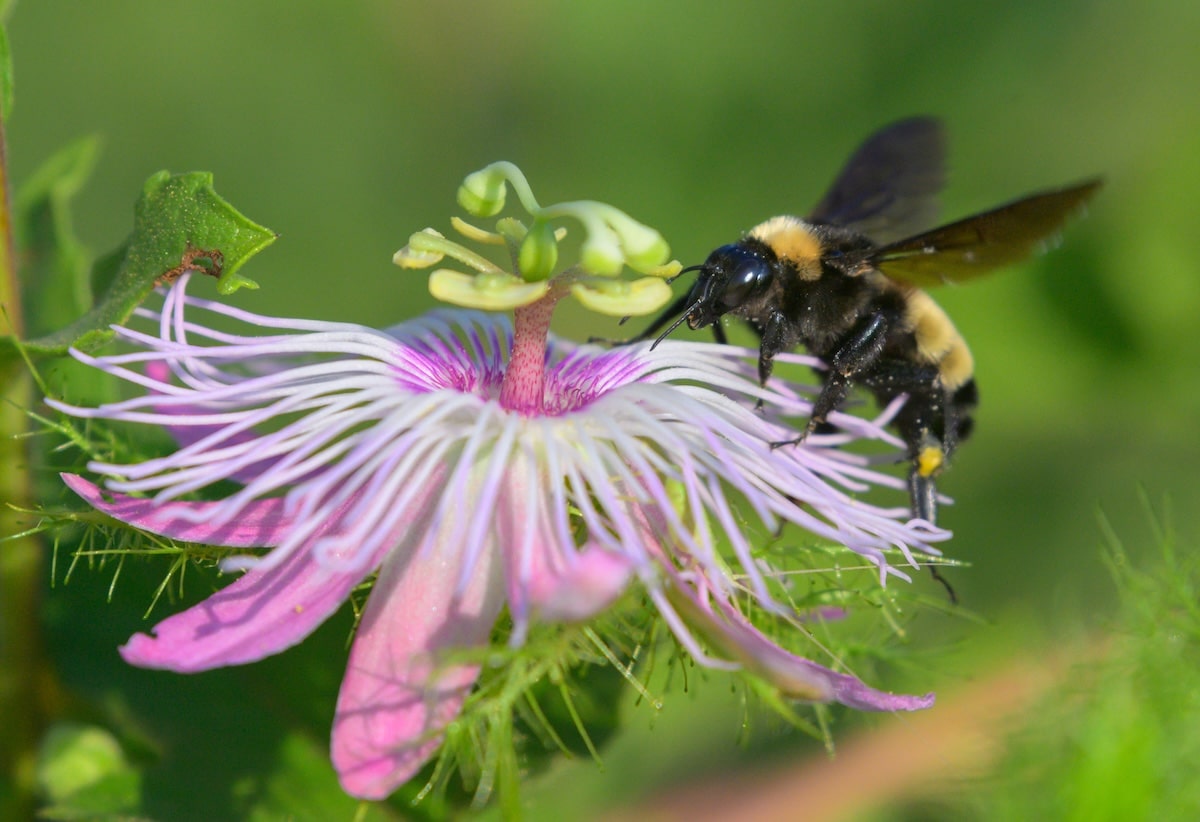
Growing passionflower literally helps support the butterfly population. Plus, the flowers attract bees and hummingbirds.
Summary
The Passionflower doesn’t need a tropical greenhouse or a team of expert horticulturists. It just needs some sun, something to climb on, and a little room to do its thing. Give it that and it will spend all summer producing blooms that will stop people in their tracks.
And don’t forget the butterfly bonus. You’re basically running a butterfly sanctuary now, not to mention also helping to feed hummingbirds and pollinators.
There’s something genuinely wonderful about this exotic and otherworldly flower. Even if you’re growing it on an ordinary fence in an ordinary backyard, it will always bring the magic of the cosmos into the your world.
Stay Purple!
Peace. 💜
What’s New
-
Sale!

Vancasso 24 Piece Stoneware Dinnerware Service for 8
Original price was: $159.99.$159.00Current price is: $159.00. -
Sale!

Purple 9ft Outdoor Patio Umbrella by Jearey
Original price was: $55.99.$49.00Current price is: $49.00. -

Ultra Soft, Extra Large, 3 Piece Dark Purple Bathroom Rug Set. Eggplant
$65.00 -
Sale!

Purple Plush Queen Size Sherpa Blanket
Original price was: $52.99.$39.00Current price is: $39.00.
Views: 90