What is Purple?
Purple is often described as mysterious, spiritual, or luxurious – but those labels barely scratch the surface.
Here at The Purple Galaxy, we explore purple not as a single meaning or belief system but as an experience – one that shifts depending on shade, context, light, and intention.
Rather than asking “What does purple symbolize?” a more useful question is:
“What does purple do?”
This article looks at purple beyond the typical symbolism and focuses on how the color purple functions on a tangible level: emotionally, visually, and creatively in everyday life.
Purple is a Color of Integration and Balance
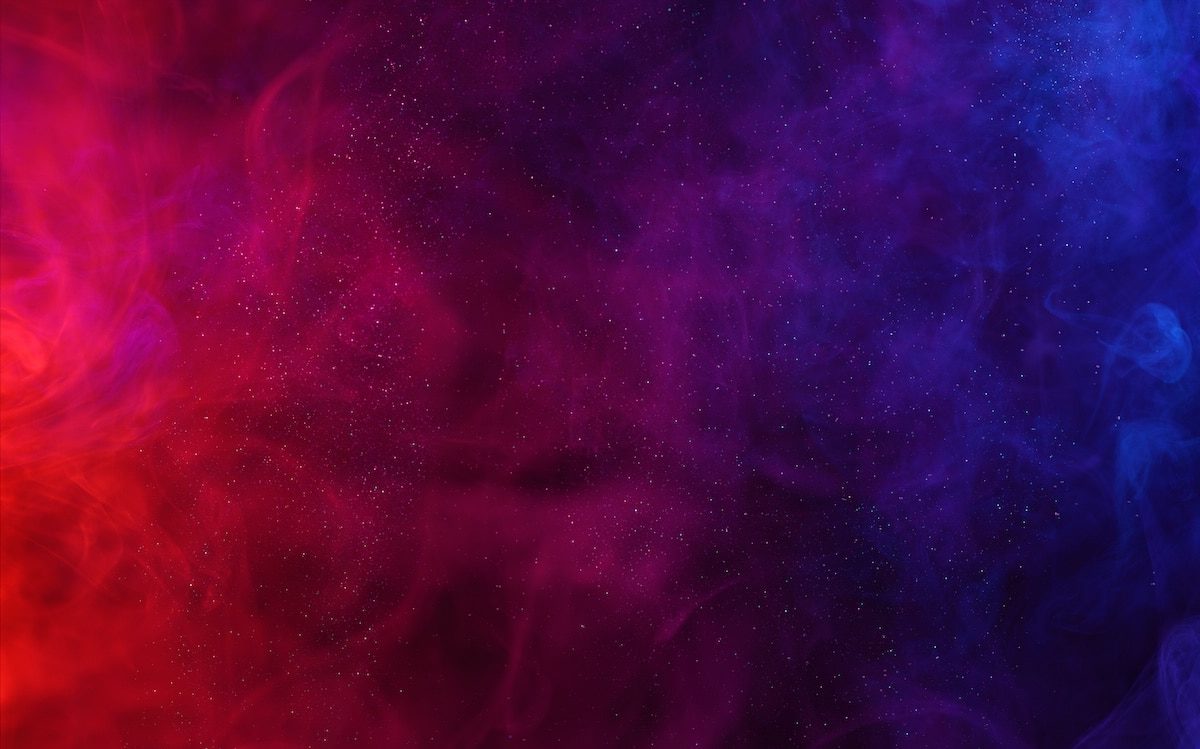
One of the most overlooked aspects of purple is how it’s formed. Purple sits between red and blue – warmth and coolness, stimulation and calm. Because of this, it naturally carries a sense of integration – a balancing of both vibes.
It doesn’t push forward like red or retreat like blue; instead, it holds space between its opposites.
This is why purple often feels:
- Expansive without being loud
- Thoughtful without being heavy
- Expressive without being overwhelming
Purple invites pause. It creates room for reflection without demanding attention.
Purple Across History
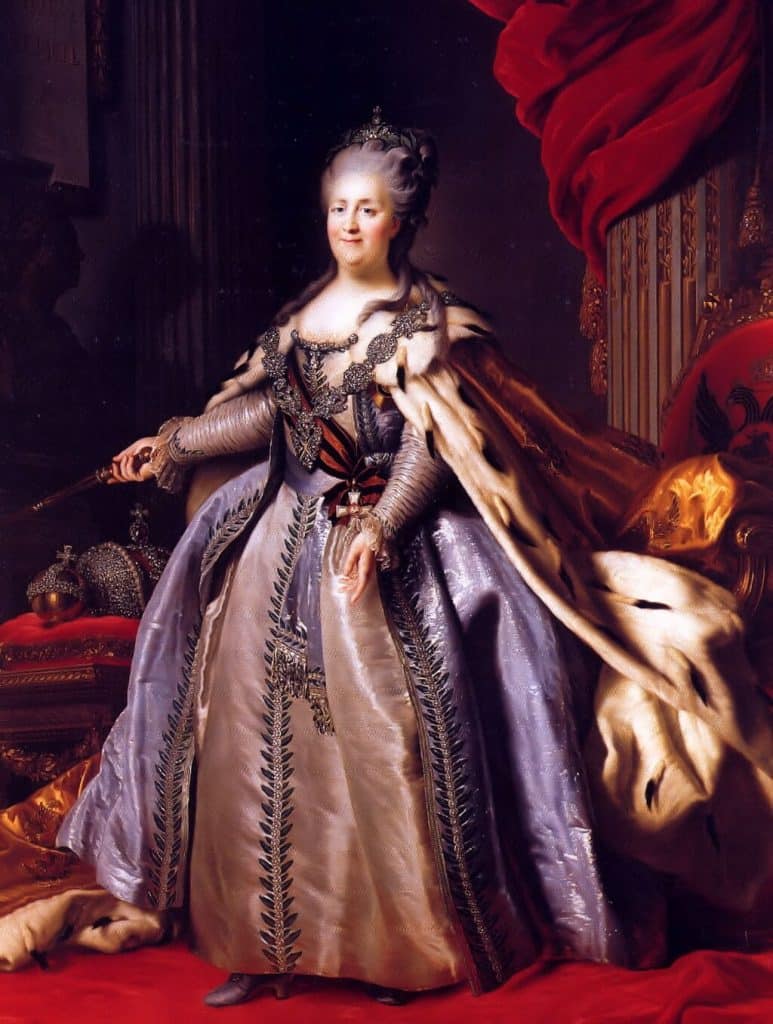
Historically, purple is associated with royalty and power – but that association came from scarcity, not mysticism.
Purple dyes like the famous Tyrian purple were once difficult and expensive to produce, often requiring thousands of mollusks to create a single gram of pigment. (See our post “The History of Purple Dye”) This rarity created the status – not the color itself.
Today, purple no longer signals elite authority or financial power – it signals depth.
In contemporary spaces, purple leans more toward:
- Creativity
- Individual expression
- Emotional nuance
- Personal space
Purple is no longer locked into its past – it evolves with how you use it.
How Purple Affects Mood and Space
Purple behaves differently depending on shade and placement:
Lighter purples (lavender, lilac)
- Calms the nervous system
- Creates softness and openness
- Works well in bedrooms, bathrooms, and creative corners
Mid-tone purples (violet, orchid)
- Encourages imagination and focus
- Adds personality without heaviness
- Works well in studios, offices, or accent areas
Deep purples (plum, indigo)
- Creates depth and intimacy
- Feels grounded and protective
- Works best in controlled amounts with good lighting
Rather than assigning meaning to purple, the aim here is to notice how it makes you feel.
Color doesn’t communicate rules – it communicates tone. Purple doesn’t state; it suggests.
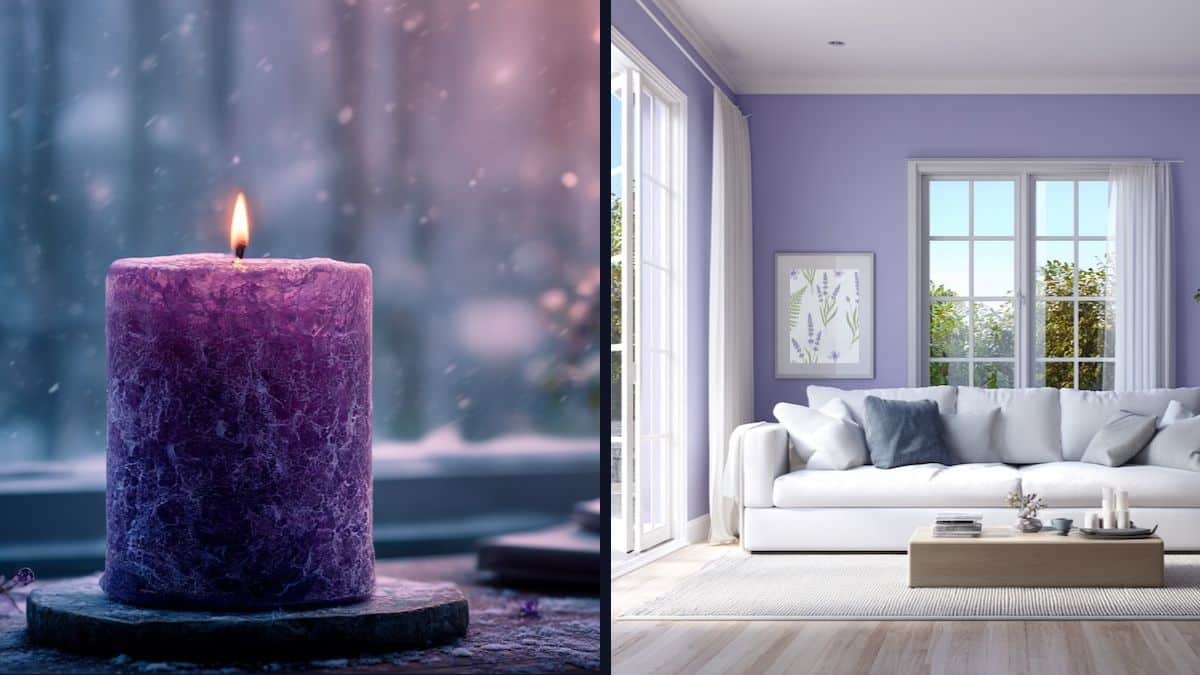
A purple candle on a winter evening speaks very differently than a big purple wall in bright daylight.
It can feel:
- Restful
- Curious
- Imaginative
- Comforting
- Slightly otherworldly, but still grounded
In our studio, we use purple as an atmosphere… it’s a feeling rather than a focal point. When layered through textiles, lighting, or subtle accents, it becomes immersive instead of overpowering.
Using Purple Intentionally – Without Overthinking It
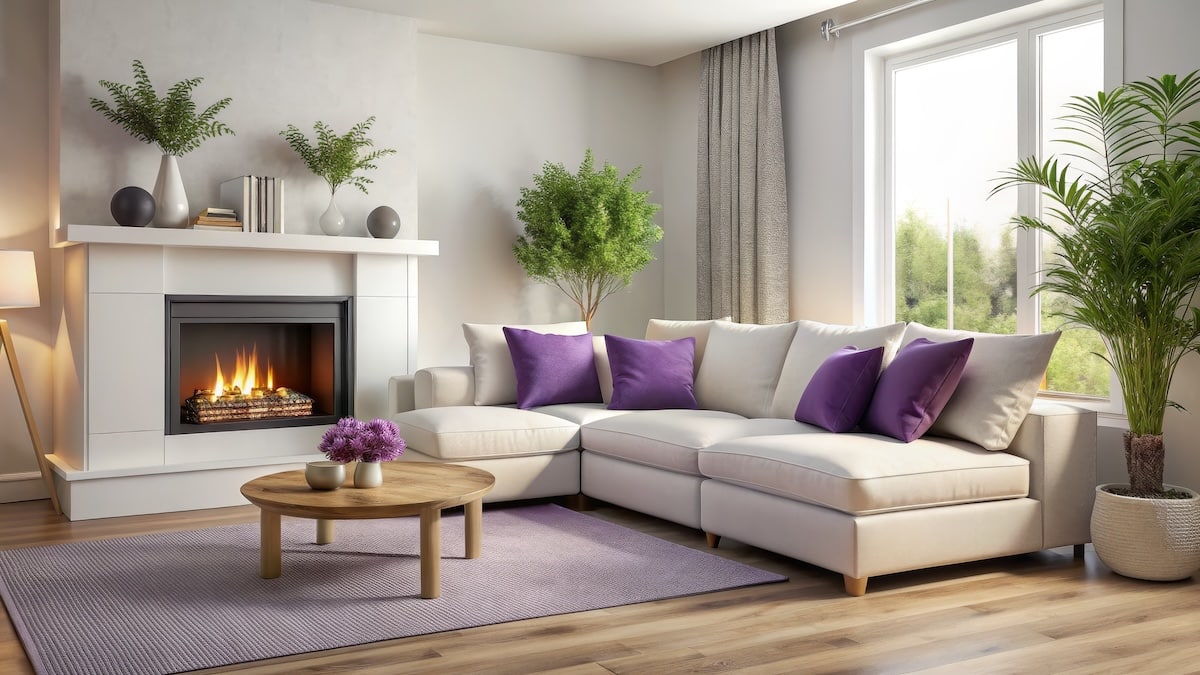
You don’t need to “believe” anything about purple to use it meaningfully.
Try this:
- Add a single purple element to a neutral space – like a few purple throw pillows – and notice the shift
- Use purple during moments that invite reflection – journaling, reading, creative work
- Pair purple with warm neutrals if the purple feels too cool, or pair with soft whites if the purple feels too heavy
- Let purple be supportive, not dominant
Purple becomes powerful when chosen consciously – not when assigned a label.
Why Purple Continues to Matter
Purple endures because it adapts.
Much like the vastness of a galaxy, the color offers layers of depth that are never fully exhausted. It’s neither purely practical nor purely expressive – it lives comfortably between function and feeling.
That’s why purple appears again and again in creative spaces, personal sanctuaries, and moments of transition.
Summary
At its core, the color purple represents integration, depth, and emotional nuance rather than fixed symbolism.
Purple functions as an experience shaped by shade, context, and personal response. When used intentionally – and without overthinking – it becomes a supportive presence that enhances creativity, calm, and self-expression.
Rather than asking what purple means universally, the invitation is more simple:
“Let the color purple guide you to an expression of your deepest self.”
This is where its real value lives.
What’s New
-
Sale!

Ultra Soft, Extra Large, 3 Piece Dark Purple Bathroom Rug Set. Eggplant
Original price was: $52.99.$52.00Current price is: $52.00. -
Sale!

Purple Plush Queen Size Sherpa Blanket
Original price was: $63.99.$45.00Current price is: $45.00. -
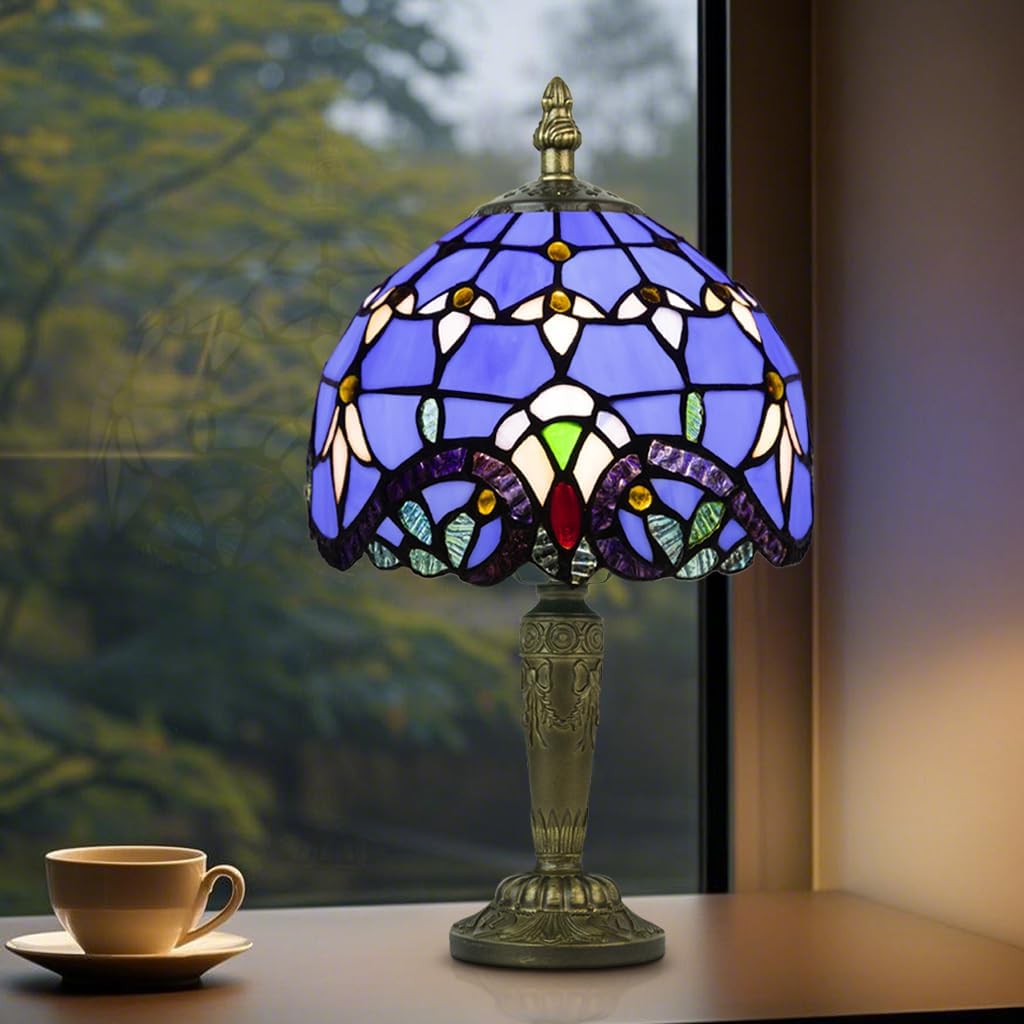
Small Purple Baroque Tiffany-Style Table Lamp
$61.00 -

Tufted Chesterfield Velvet Loveseat with Scrolled Arms, BlackBerry and Dark Brown
$414.00
Views: 49